



What is a caudal epidural injection?
A caudal epidural injection is a minimally invasive procedure that delivers a combination of anti-inflammatory medication (corticosteroid) and local anaesthetic into the epidural space, the area surrounding your spinal cord and nerve roots.
Your clinician guides a fine needle through the sacral hiatus, a bony opening at the base of your spine, and uses real-time ultrasound imaging to ensure accurate placement. The procedure typically takes 10 to 15 minutes, though you’ll spend about 45 to 60 minutes at the clinic, including preparation and recovery.
The epidural space contains fatty tissue and blood vessels, and extends from the base of your skull down to the lowest part of your spine. Injecting medication here allows it to spread and reduce inflammation around multiple nerve roots that may be causing pain down your legs or in your lower back.
Conditions where it helps
Sciatica from disc prolapse
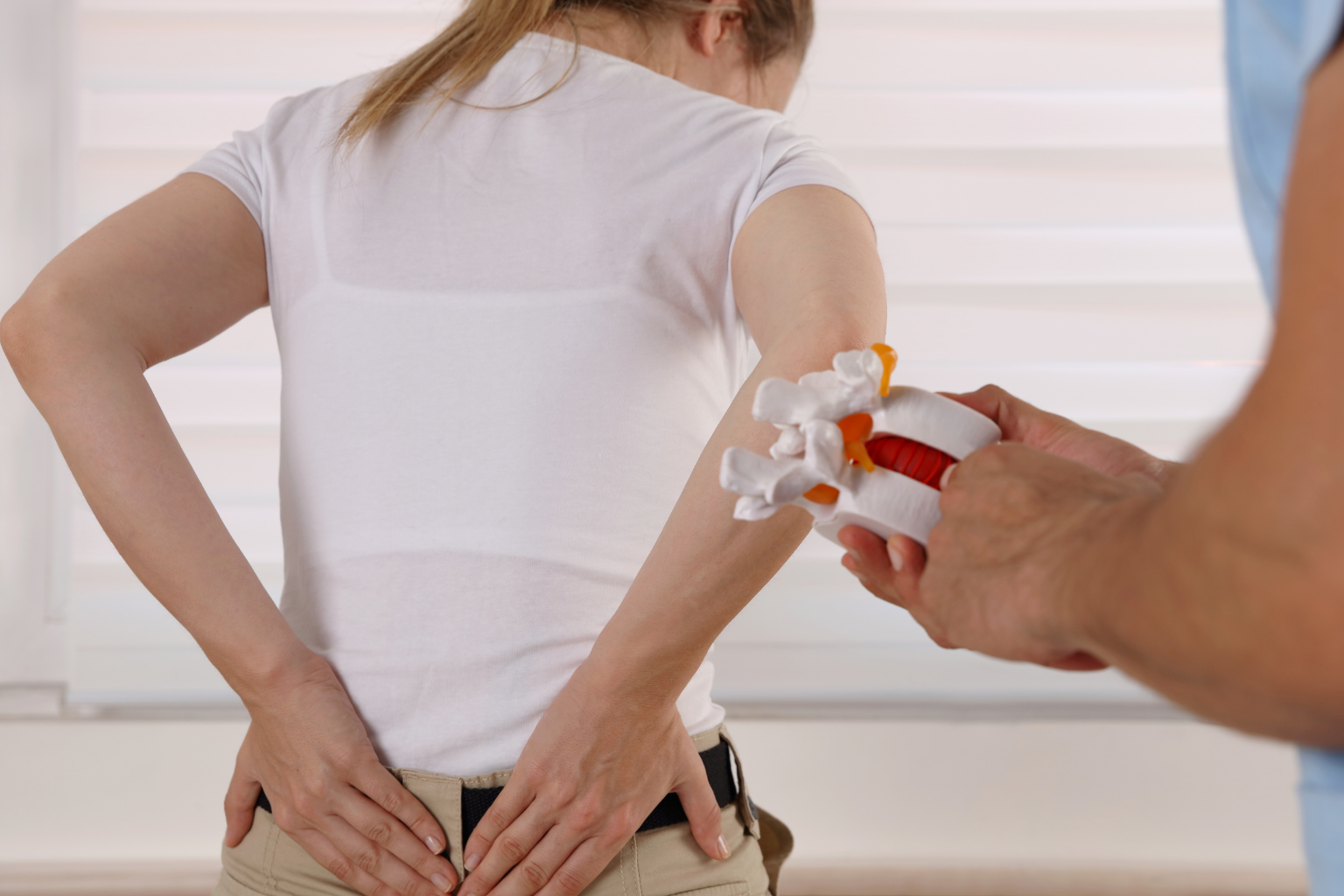
When an intervertebral disc bulges or herniates, it can press on and inflame the sciatic nerve root, causing sharp pain, numbness, or tingling running down one or both legs from your buttocks to your feet. You can read more about the causes and symptoms of sciatica in our detailed guide. A caudal epidural injection can help reduce the inflammation around the compressed nerve, offering relief that allows you to return to movement and physiotherapy.
This is why sciatica caudal epidural injections are often recommended when nerve root inflammation is the primary driver of leg pain.
Lumbar spinal canal stenosis
This age-related narrowing of the spinal canal can compress multiple nerve roots, causing bilateral leg pain, heaviness, or weakness worsened by standing or walking but improved by sitting. Because the caudal approach reaches a broader area of the lower spine, it can help ease symptoms across several affected levels.
Post-surgical pain
If you’ve had previous spinal surgery, ongoing pain sometimes results from scar tissue (epidural fibrosis) irritating nerve roots. A caudal epidural injection may help reduce inflammation and improve function, particularly if you haven’t had relief from other treatments.
General lumbar radiculopathy
Any inflammation of the lower spinal nerve roots can cause shooting pain, pins and needles, or weakness in your legs. This procedure targets the inflammation directly.
Chronic low back pain with inflammatory features
Not all back pain involves nerve root irritation; however, if your pain is driven by inflammation rather than purely mechanical causes, an epidural injection can provide a window of reduced symptoms for intensive rehabilitation.
Symptoms and when to consider this treatment
You might be a candidate for a caudal epidural injection if you experience:
- Pain radiating from your lower back down one or both legs
- Numbness, tingling, or weakness in your buttocks, legs, or feet
- Pain that significantly limits walking, sitting, or daily activities
- Symptoms that have persisted despite physiotherapy, activity modification, and pain medication
- Severe pain that is preventing you from engaging in rehabilitation
This procedure is typically considered when symptoms are affecting your quality of life and conservative management alone hasn’t provided adequate relief, not as a first-line treatment before trying physiotherapy or other non-invasive options.
Ultrasound guidance and clinician experience matter for safety. Book with our Bishop's Stortford team to see it done properly.

When to see a doctor
If you experience any of the following, book an appointment with your GP or clinic:
- Persistent pain lasting more than a few weeks despite self-care and rest
- Pain worsening despite paracetamol or over-the-counter anti-inflammatory medication
- Numbness or weakness developing in your legs or affecting bladder or bowel control
- Pain following a specific injury or accident
- Any concern that symptoms might be serious
Severe or progressive leg weakness, loss of bladder or bowel control, or numbness in the saddle area (where you’d sit on a bicycle seat) are red flags requiring urgent evaluation.
NICE guideline NG59 on low back pain and sciatica sets out when referral and specialist intervention should be considered.
What to expect during and after the procedure
Before your injection
Your clinician will review any medications you’re taking, particularly blood-thinning drugs, which may need adjustment beforehand. You’ll sign an informed consent form and have a chance to ask questions. You’ll lie face down on a comfortable procedure table, and the lower back and sacral region will be cleaned with an antiseptic solution to prevent infection.
The injection itself
Using an ultrasound probe, your clinician locates the sacral hiatus and guides a small needle through the overlying ligament into the epidural space. You may feel pressure or brief stinging as the needle passes through the skin and underlying tissue.
As the medication is injected, you might experience pressure, fullness, or mild aching in your lower back or a warm sensation in your buttocks.
Most patients describe discomfort as mild to moderate rather than severe; tell your clinician immediately if you experience sharp or severe pain.
Recovery
You’ll rest for 20 to 30 minutes in a monitored recovery area. Some patients experience temporary leg weakness or numbness from the local anaesthetic, this is normal and resolves as the medication wears off. You should arrange for someone to drive you home; do not drive yourself immediately after the procedure.
Caudal epidural injection recovery is generally straightforward, with most people back to light daily activity within a day or two.
Days 1 to 3
In the first 24 to 48 hours, some patients notice immediate pain relief from the local anaesthetic component, which then fades after a few hours. Others experience a temporary increase in pain (steroid flare) lasting 1 to 3 days, which is the result of the corticosteroid crystals and is self-limiting.
Apply ice to your injection site for 15 to 20 minutes several times daily if soreness develops. Avoid heavy lifting (more than 10 to 15 pounds), strenuous exercise, and prolonged standing during this initial period.
Weeks 2 to 8
The anti-inflammatory effects of the corticosteroid typically become noticeable during this period. Gradually increase your activity based on how you feel. This is an ideal time to engage intensively with physiotherapy while pain is reduced, as exercise tolerance improves significantly. Most patients can resume normal daily activities within one week.
Long-term
Symptom improvement usually peaks at 2 to 8 weeks post-injection. Some patients enjoy relief lasting many months; others find symptoms gradually return after several weeks. Duration varies based on how severe your underlying condition is, whether pain is primarily inflammation or mechanical compression, your engagement with physiotherapy, and other individual factors. Your clinician will develop a personalised follow-up plan.
Ultrasound guidance and clinician experience matter for safety. Book with our Bishop's Stortford team to see it done properly.
Risks and expected outcomes
Caudal epidural injection is generally safe when performed by experienced clinicians using proper technique. Serious complications are rare. Most caudal epidural injection side effects are mild and temporary, as outlined below.
Common effects (less than 10% of patients):
- Temporary numbness or tingling in your legs (lasts 30 to 60 minutes)
- Lightheadedness or brief dizziness (resolves with rest and fluids)
- Mild soreness at the injection site (resolves within days)
- Temporary bladder sensation changes
- Steroid flare (temporary pain increase for 24 to 72 hours)
Rare complications (less than 1%):
- Allergic reaction to medication
- Infection (prevented through strict sterile technique)
- Bleeding or bruising in the epidural space
- Temporary or persistent headache
- Brief dural puncture (puncture of the membrane surrounding nerve fluid)
Extremely rare (less than 0.1%):
- Cauda equina syndrome (compression of multiple nerve roots, a surgical emergency)
- Permanent nerve damage or paralysis
- Vision disturbances
Effectiveness: Recent data show that roughly 9 in 10 patients experience at least 50% symptom improvement, with average pain reduction from 8.6 to 2.9 on a 10-point scale.
However, evidence indicates that short-term benefit (3 months) is stronger than long-term outcomes. By 6 to 12 months, improvement rates may not differ greatly from natural disease progression, suggesting the primary value is providing a window of reduced pain during which you can engage more effectively with rehabilitation.
This procedure works best alongside physiotherapy, activity modification, and gradual return to normal function, not as a standalone solution.
How SABA Health Clinic can help
At SABA Health Clinic in Bishop's Stortford, our doctors can help you find answers and a treatment plan that fits your needs.
- Specialist assessment to determine whether a caudal epidural injection is appropriate for your back or leg pain
- Same-day and next-day appointments available, with no GP referral needed
- Ultrasound-guided caudal epidural injections performed by experienced clinicians
- Referral pathways for physiotherapy and musculoskeletal assessment to complement your injection and support long-term recovery
Ultrasound guidance and clinician experience matter for safety. Book with our Bishop's Stortford team to see it done properly.

.png)








.svg)


