


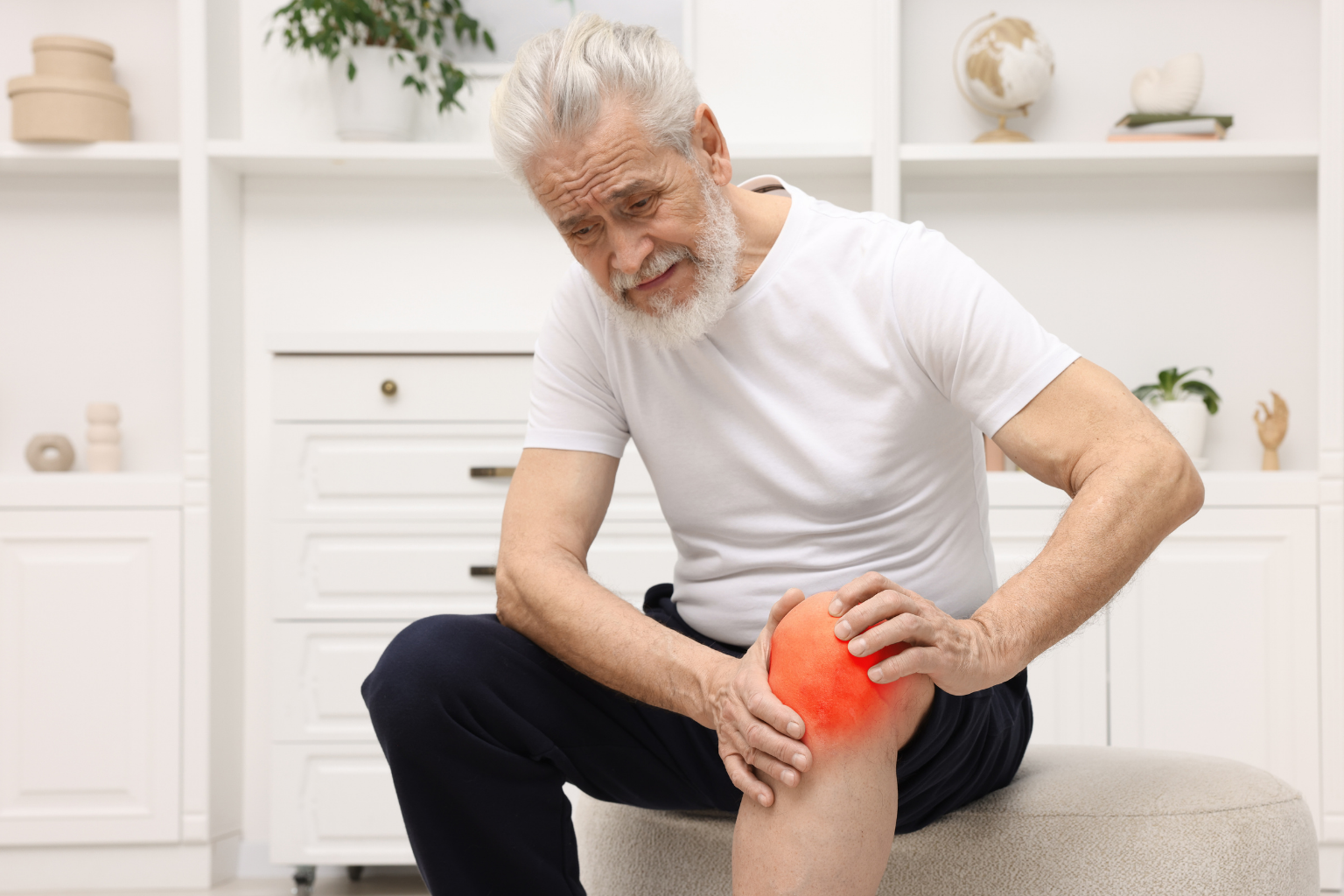
What is knee pain when climbing stairs?
Knee pain on stairs is one of the most common lower-limb complaints, especially in people over 40 or those who do repetitive activities such as running or cycling. Stairs are harder on your knees than flat walking because your knee bends to a much greater angle, and on the way down, your muscles have to work against gravity to control the movement.
According to the NHS, knee pain can have many different causes, and the type of pain and where you feel it matter when it comes to finding the right treatment.
The encouraging thing is that many cases of stair-related knee pain are mechanical in nature, meaning they relate to how the knee is moving or being loaded rather than a serious injury. That said, some patterns do warrant professional assessment to rule out cartilage damage, meniscal irritation, or early arthritis.
What causes knee pain on stairs?
Patellofemoral pain syndrome
Pain around or behind the kneecap that flares on stairs, squats, or after prolonged sitting is often due to patellofemoral pain syndrome (PFPS). In this condition, the kneecap does not track smoothly through its groove as the knee bends and straightens, which creates increased pressure across the joint. Weakness in the hip muscles, tight quadriceps, or poor movement patterns can all contribute. Going downstairs tends to trigger PFPS more than going up, because descent places a greater demand on your thigh muscles to control the load.
Kneecap pain when climbing stairs, and particularly pain behind the kneecap on the way down, is one of the most commonly reported patterns our team sees.
Early osteoarthritis
If your stair pain comes with creaking, morning stiffness, or an ache that builds throughout the day, early wear in the kneecap joint may also be a factor. This is more common in people over 50 or those with a history of knee injury, or individuals carrying excess body weight. The NHS notes that osteoarthritis of the knee develops gradually and is typically managed with load modification, strength work, and sometimes medical support rather than surgery.
Meniscus or joint-line problems
Pain on the inside or outside edge of your knee, particularly if accompanied by swelling, catching sensations, or a history of twisting the knee, can suggest meniscal irritation or cartilage wear. This is a different pattern from front-of-knee pain and benefits from a different approach. Joint-line tenderness is worth getting assessed by a clinician.
Medial knee pain, discomfort along the inner joint line, is a common indicator of meniscal involvement and helps to distinguish this pattern from the front-of-knee pain associated with PFPS.
Muscle weakness and poor control
Your quadriceps, hip abductors, and hip external rotators all work together to stabilise your knee on stairs. When these muscles are weak or fatigued, the kneecap can be pulled out of alignment and the joint takes more load than it should. This is especially common after a period of reduced activity, during recovery from injury, or if you have never done targeted lower-limb strength work.
Knee weakness going up stairs, even without significant pain, is often the earliest sign that this pattern has developed.
You do not need a GP referral to book with us. Our team in Bishop's Stortford is here to help you understand what is causing your knee pain and take the next step with confidence.

What are the signs to look out for?
Stair-related knee pain can vary widely. These are the most commonly reported symptoms:
- Pain around, behind, or under the kneecap that worsens on stairs, squats, or lunges
- Discomfort that eases once you stop the aggravating activity
- Creaking, clicking, or a grating sensation in the knee
- Mild swelling, particularly towards the end of the day
- Morning stiffness or pain when extending the leg after sitting
- Pain on the inside or outside edge of the knee
- A feeling that the knee is unstable or weak during certain movements
- Thigh pain or aching in the front of the thigh during or after stair use, including when ascending stairs
When should you see a doctor?
Most stair-related knee pain improves with a few weeks of rest, activity adjustment, and gentle strengthening. However, it is worth seeking prompt assessment if you notice any of the following:
- Sudden or significant swelling that develops within a few hours
- True locking, where the knee gets stuck and you cannot straighten it
- Buckling or giving way, where the knee feels suddenly unsafe
- Inability to bear weight or walk even with support
- A hot, red, or warm knee, especially alongside a fever
- Pain that persists for more than a few weeks despite rest and modified activity
- Pain that began after a clear injury, fall, or twist
- A knee that looks visibly deformed or out of alignment
These signs can point to cartilage injury, meniscal tear, or infection, and deserve a proper clinical assessment rather than self-management alone. Being prepared for your appointment can help you get the most value from that assessment.
You do not need a GP referral to book with us. Our team in Bishop's Stortford is here to help you understand what is causing your knee pain and take the next step with confidence.
How SABA Health Clinic can help
At SABA Health Clinic in Bishop's Stortford, our team offers specialist pain management assessments for adults experiencing joint pain, including stair-related knee pain, with same-week availability and no GP referral required.
- Comprehensive clinical assessment to identify the cause of your knee pain
- Same-week appointments with no GP referral needed
- Access to targeted treatment plans, including physiotherapy referral, pain management, and medication where appropriate
- Ongoing support and follow-up to monitor progress and adjust your care
- A judgement-free environment where your symptoms are taken seriously from the first appointment
You do not need a GP referral to book with us. Our team in Bishop's Stortford is here to help you understand what is causing your knee pain and take the next step with confidence.

.png)








.svg)


