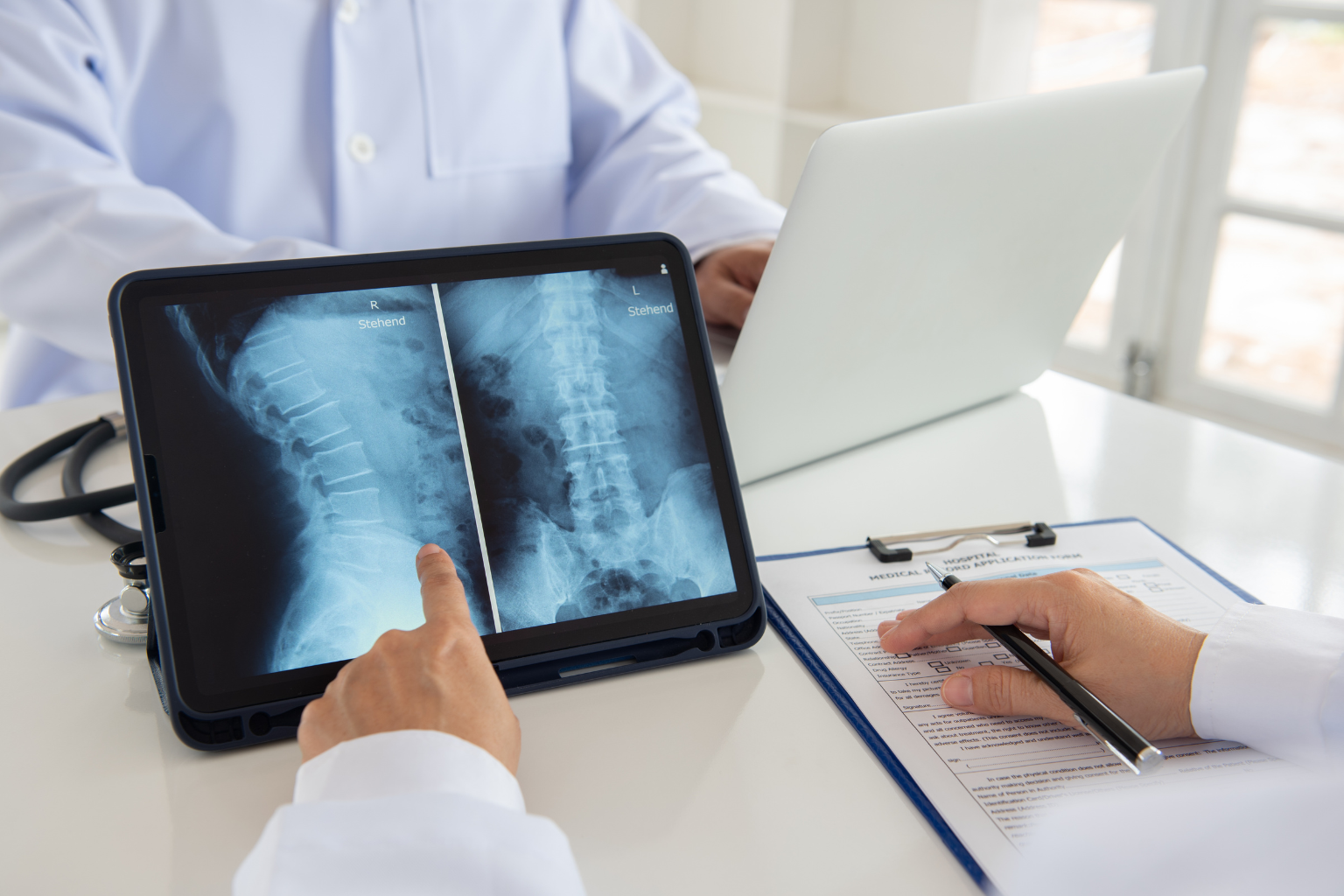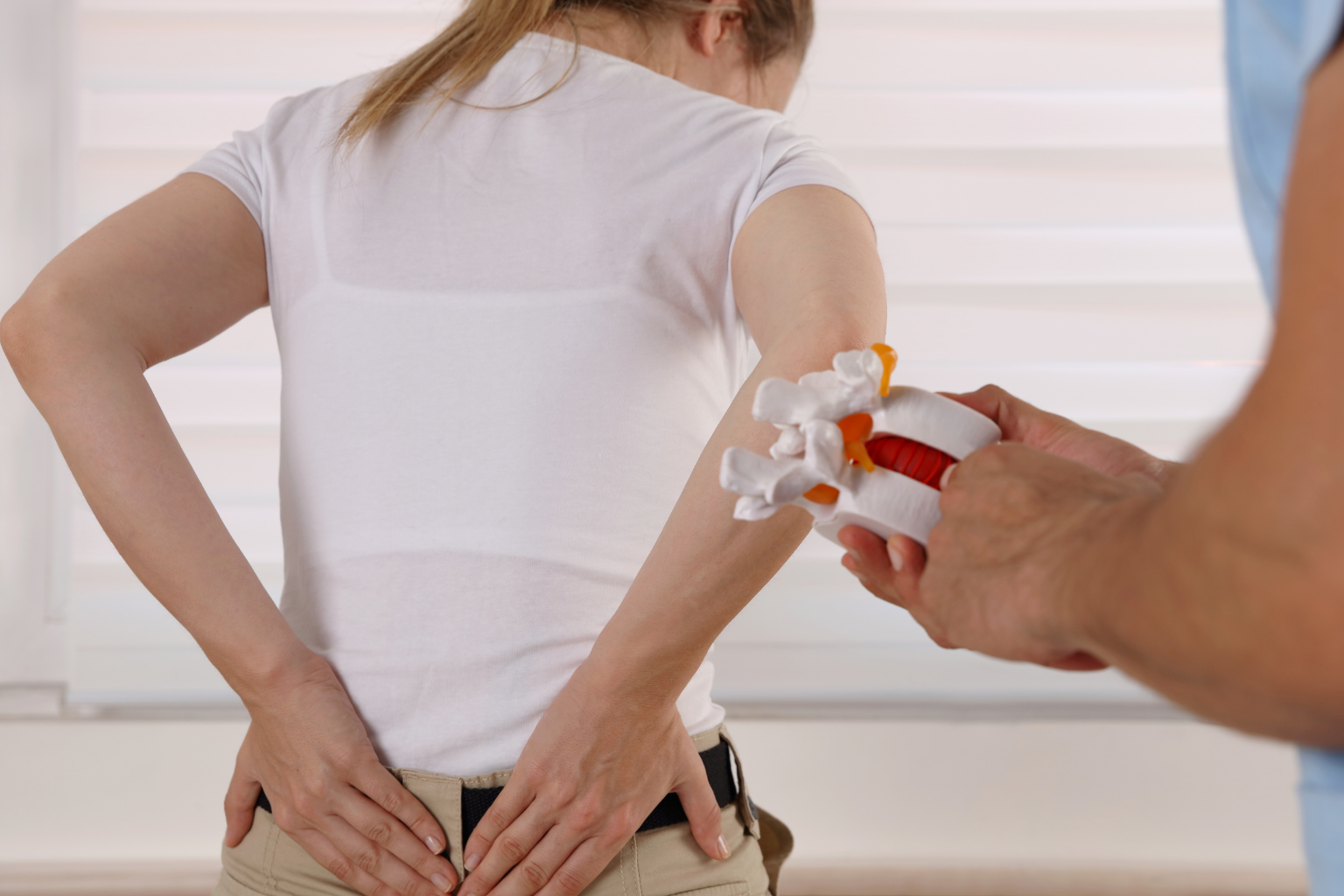


What is lumbar disc herniation?
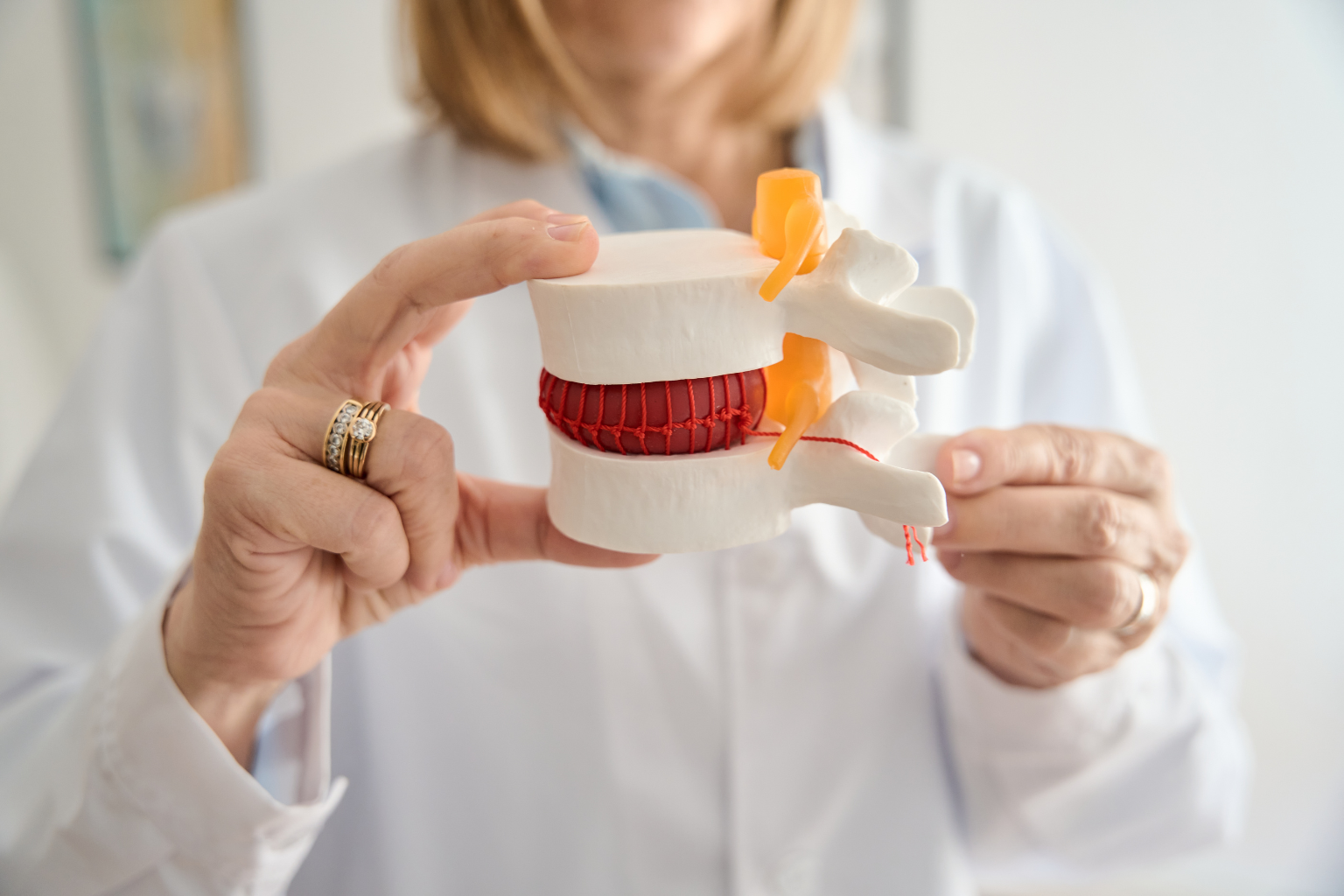
A lumbar disc herniation (often called a "slipped disc" or "prolapsed disc") happens when the intervertebral disc between your lower back vertebrae is damaged.
Each disc has a tough fibrous outer ring (annulus fibrosus) and a softer inner core (nucleus pulposus). When the outer layer tears, part of the inner material can push outwards and irritate or compress a nearby nerve root.
Despite the term "slipped," the disc doesn’t actually slide out of place. Instead, the nucleus bulges through small tears in the annulus.
Many small herniations improve on their own over time as inflammation settles and the disc material shrinks and dehydrates. In fact, only a minority of people with a lumbar disc herniation need surgery; most improve significantly with structured conservative management, sometimes supported by targeted cortisone injections.
Common causes and why it happens
A disc herniation can develop suddenly, through a single injury, or gradually, as the disc weakens over time. The main contributing factors are outlined below.
Heavy lifting or awkward movement
A single episode of heavy lifting, particularly when your spine is flexed or twisted, can trigger a disc herniation. This is especially true if the disc is already weakened by age or previous strain. The sudden mechanical stress tears the annulus fibres and forces the nucleus outwards.
Gradual weakening of the disc
Over time, the annulus fibres naturally weaken due to repetitive stress, ageing or degeneration. A relatively minor movement, bending to pick something up, a slight twist, or even coughing, can then trigger herniation when the annulus is already compromised.
Repetitive bending, twisting and heavy work
Jobs or activities involving frequent bending, twisting or heavy manual work place ongoing stress on the discs. Warehouse workers, gardeners, builders, and others in demanding physical roles face a higher risk. Even office workers with poor posture during prolonged sitting can experience gradual disc wear.
Age-related changes and lifestyle factors
As you get older, discs naturally lose water content and become less flexible. Smoking accelerates disc degeneration by reducing the blood supply to the discs.
Obesity puts an extra load on the spine, and genetic factors influence how resilient your discs are. These risk factors often work together, making herniation more likely.
Symptoms to watch for
Symptoms can range from mild discomfort to severe pain, and typically include:
- Low back pain, usually sudden onset, sometimes triggered by a particular movement; often worsened by sitting, bending forwards or coughing
- Leg pain (sciatica), sharp, shooting, burning or electric pain radiating from the buttock down the thigh and calf; often more severe than back pain
- Numbness or tingling, in the area supplied by the compressed nerve root, such as the outer calf, top of the foot or sole
- Muscle weakness, difficulty lifting the foot or standing on tiptoes, suggesting more significant nerve compression
- Pain that varies with position, often worse when sitting or bending forwards; may ease with gentle walking or lying flat with knees bent
- Difficulty with daily activities, pain or weakness affecting work, sport or self-care
Not everyone with a disc herniation experiences severe symptoms. The size of the herniation, which nerve root is involved and your individual pain sensitivity all affect how much discomfort you feel.
A Bishop's Stortford spine assessment can check whether your current approach is helping or quietly making things worse.

When to see a doctor
Book an appointment with your GP or visit a clinic if disc herniation symptoms are affecting your daily life, or if symptoms persist beyond a few weeks despite rest and over-the-counter pain relief.
Seek emergency care (999 or A&E) immediately if you experience any of these red-flag symptoms, which may indicate cauda equina syndrome:
- Saddle numbness (numbness in the area where you would sit on a saddle)
- Difficulty passing urine or loss of bladder control
- Loss of bowel control or faecal incontinence
- Rapidly worsening leg weakness or paralysis
- Severe, progressive neurological symptoms
Cauda equina syndrome is a medical emergency and requires urgent spinal assessment to prevent permanent nerve damage.
Treatment options
Treatment is matched to the severity of your symptoms, moving from conservative care through to injections and, for a minority of people, surgery.
Conservative (non-surgical) care
Most people improve within weeks to a few months with conservative management, which remains the first-line approach.
Education and reassurance. Understanding that many disc herniations improve naturally as inflammation settles helps reduce anxiety. Your doctor will explain the expected time course and how to manage flare-ups.
Analgesia and anti-inflammatory medication. Short-term use of paracetamol or ibuprofen can help control pain and inflammation, allowing you to move more comfortably. Your GP will recommend what is suitable for you.
Activity modification, not bed rest. Avoiding heavy lifting and extreme positions that trigger leg pain is sensible, but prolonged bed rest is unhelpful. Instead, gentle movement, short walks, frequent posture changes and light stretching keep your spine mobile and prevent stiffness.
Exercise-based rehabilitation. Individualised physiotherapy maintains your mobility and gradually restores trunk and hip strength. Your physiotherapist will teach nerve-gliding exercises and movement control strategies, progressing towards normal daily and work activities. Regular exercise speeds recovery and reduces the risk of recurrence.
Workplace and lifestyle review. Advice on sitting posture, correct lifting technique and pacing at work prevents further strain. Support for weight management, smoking cessation and general fitness also improves long-term outcomes.
Cortisone injections (epidural injection)
In selected cases where leg pain (sciatica) remains disabling despite optimal conservative care, cortisone injections offer an adjunctive treatment option.
How they work. A cortisone injection is delivered into the epidural space via the sacral hiatus (caudal epidural injection), allowing the medication to spread upwards to the compressed nerve roots. The cortisone reduces inflammation and swelling around the nerve, decreasing pain and improving mobility.
When they are considered. Injections are discussed when there is clear clinical and imaging evidence of disc herniation with nerve root compression, conservative measures have been optimised, but leg pain remains function-limiting, and you wish to avoid or defer surgery.
Expected benefits. Relief typically lasts weeks to a few months and varies between individuals. Injections do not reverse the structural herniation or "put the disc back in," but they provide a valuable window during which inflammation settles and you can engage more effectively with physiotherapy and activity.
Limitations. The number of injections is limited. If the benefit is inadequate or symptoms recur quickly, your doctor will revisit the diagnosis and discuss alternative strategies, including surgical referral if appropriate.
Surgery
Surgery is reserved for specific situations: cauda equina syndrome (emergency), severe or progressive neurological deficit, or persistent, disabling leg pain despite an adequate course of optimal conservative and interventional treatment.
Common surgical procedures include microdiscectomy, in which a surgeon removes the protruding disc material to decompress the nerve root. Surgery is effective for severe, persistent nerve-related leg pain but carries inherent risks. Your surgeon will discuss whether surgery is advisable for your particular situation.
A Bishop's Stortford spine assessment can check whether your current approach is helping or quietly making things worse.
Recovery and prevention
Most people return to normal activities within 6 to 12 weeks with consistent conservative management. Recovery depends on the size of the herniation, your commitment to physiotherapy, and your lifestyle choices.
Ongoing movement and exercise prevent recurrence. Maintain the strengthening and mobility exercises your physiotherapist taught you, even after symptoms resolve. Strong core muscles protect your spine and reduce the risk of future herniation.
Ergonomic awareness matters long-term. Use proper lifting technique (bend your knees, keep the load close to your body, avoid twisting while holding the weight). Arrange your workstation to support good posture. Take regular breaks from sitting.
Lifestyle factors influence disc health. Maintain a healthy weight, stop smoking if relevant, and stay active. These changes improve blood flow to your discs and reduce overall spine strain.
Manage stress and sleep. Tension and poor sleep can increase pain perception and slow healing. Regular movement, relaxation and adequate rest support recovery.
How SABA Health Clinic can help
At SABA Health Clinic in Bishop's Stortford, our doctors can help you find answers and a treatment plan that fits your needs.
- Specialist assessment to identify the underlying cause of your back and leg pain and guide your next steps
- Same-day and next-day appointments available, with no GP referral needed
- Ultrasound-guided caudal epidural injections as part of a comprehensive treatment plan
- Referral pathways for physiotherapy and musculoskeletal assessment to support your recovery
A Bishop's Stortford spine assessment can check whether your current approach is helping or quietly making things worse.

.png)