


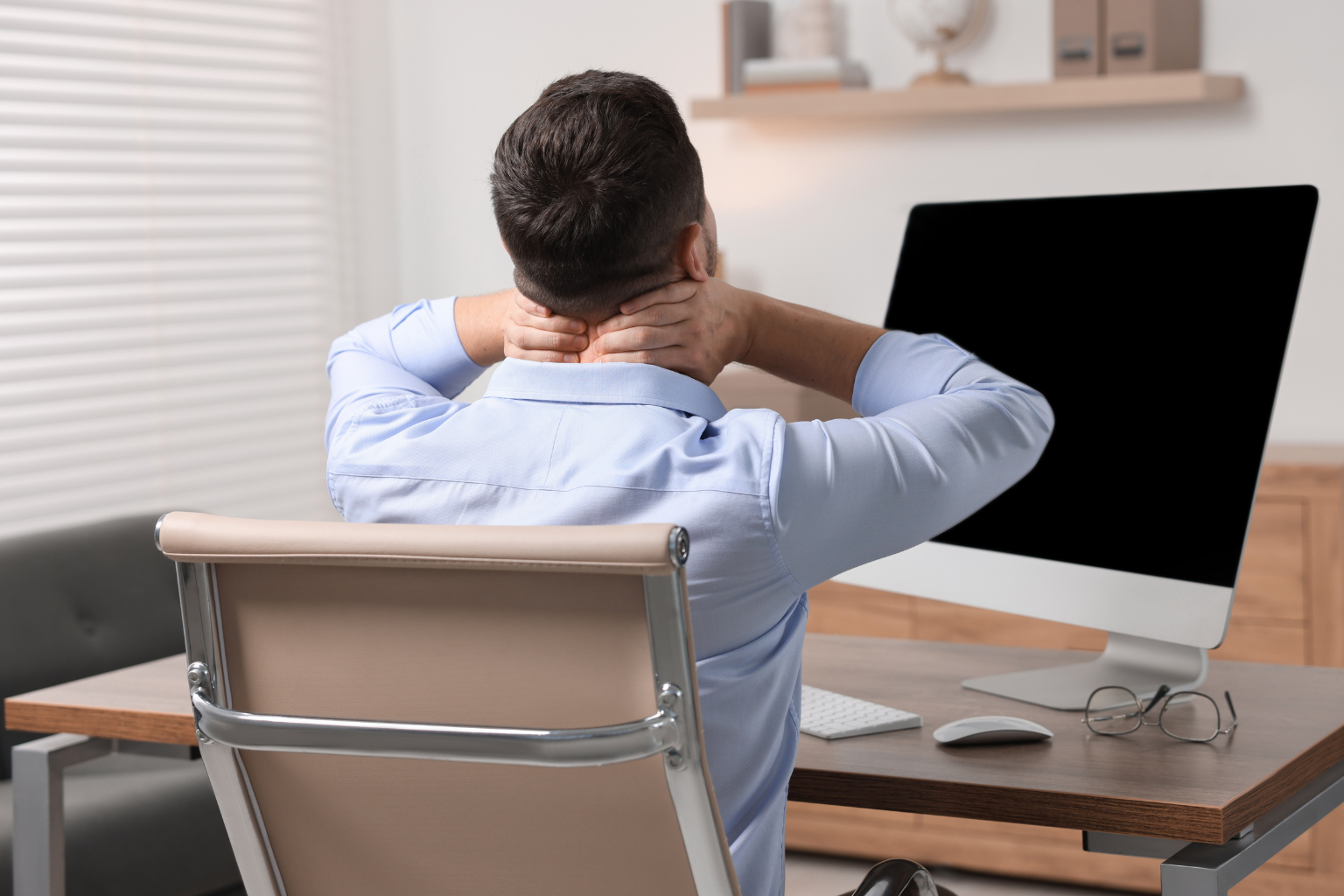
What Is ‘Tech Neck’?
‘Tech neck’ (also called text neck) is a modern term used to describe the neck pain and damage caused by looking down at handheld devices for prolonged periods. While the name is informal, the condition is very real and very common.
When you hold your head in a neutral, upright position, the weight it places on your cervical spine is roughly 4–5 kilograms. But as you tilt your head forward to look at a screen, that effective load increases dramatically:
- At 15° of forward tilt: approximately 12 kg of force
- At 30° of forward tilt: approximately 18 kg of force
- At 45° of forward tilt: approximately 22 kg of force
- At 60° of forward tilt: approximately 27 kg of force
Most of us look at our phones at a 45–60° angle. Over hours and years, this places enormous and repetitive stress on the muscles, ligaments, discs, and vertebrae of the neck.
Common Symptoms of Smartphone-Related Neck Pain
The symptoms of tech neck can range from mildly irritating to genuinely debilitating. They include:
- Persistent aching or stiffness in the neck and upper back
- Tension headaches that begin at the base of the skull
- Shoulder tightness and pain
- Tingling or numbness radiating into the arms or hands
- Reduced range of neck movement
- Fatigue in the neck muscles, especially toward the end of the day
If you are experiencing arm numbness, significant weakness, or severe, persistent pain, we recommend seeing an orthopaedic specialist promptly, as these can be signs of cervical disc involvement.
Visit our Bishop's Stortford clinic for a personalised assessment, expert medical advice, and treatment recommendations tailored to your individual needs.

Why Posture Matters More Than You Think
Your spine has three natural curves, the cervical (neck), thoracic (mid-back), and lumbar (lower back). These curves work together to absorb shock and distribute the forces of daily movement. When you consistently hold a forward-head posture, you flatten the natural cervical curve. Over time, this leads to:
Muscle Imbalance
The deep neck flexor muscles (which support posture) weaken from disuse, while the superficial muscles at the back of the neck become chronically overloaded and tight. This imbalance makes the neck far more vulnerable to strain and injury.
Disc Stress
The intervertebral discs between your cervical vertebrae are under constant pressure when your head is held forward. Over the years, this can accelerate disc degeneration, increasing the risk of disc bulges, prolapse, and cervical spondylosis.
Ligament Creep
Sustained forward posture causes the posterior neck ligaments to stretch and lose their elasticity, a process known as ‘creep’. This reduces the structural support of the spine and can become permanent if the posture is not corrected.
Screen Time and Children: A Growing Concern
Children and teenagers are at particular risk. Their spines are still developing, meaning that the effects of sustained poor posture can have long-term consequences. Studies have shown that children who spend more than two hours per day on screens are significantly more likely to report neck and back pain, and these symptoms can persist into adulthood.
Encouraging children to take regular breaks from screens, hold devices at eye level, and participate in physical activity is essential for healthy spinal development.
7 Practical Tips to Protect Your Neck
The most effective approach combines posture correction, regular movement, and targeted strengthening exercises.
1. Raise Your Screen to Eye Level
Whether using a phone, tablet, or laptop, hold or position your device so that the top of the screen is roughly at eye level. This single change can dramatically reduce the forward-head load on your neck.
2. Follow the 20-20-20 Rule
Every 20 minutes, look up from your screen for at least 20 seconds and let your eyes focus on something at least 20 feet (6 metres) away. This helps reduce both eye strain and postural fatigue. Use this break to reset your posture, roll your shoulders back, gently retract your chin, and take a few deep breaths.
3. Strengthen Your Deep Neck Flexors
A simple chin tuck exercise is one of the most effective ways to re-activate the deep cervical muscles. Gently draw your chin straight back (as if making a ‘double chin’), hold for 5 seconds, and repeat 10 times. Perform this 2–3 times daily as part of a regular neck mobility routine. The NHS also provides a range of flexibility exercises that support neck and upper back mobility.
4. Stretch Your Chest and Upper Back
Prolonged sitting causes the chest muscles to tighten and the upper back to round. A doorway chest stretch (arms at 90° against a door frame, gently leaning forward) held for 30 seconds helps open the chest and encourage an upright posture.
5. Set Screen Time Reminders
Use your phone’s built-in screen time or focus features to set hourly reminders to check your posture and take movement breaks. Awareness is the first step to change.
6. Sleep Position Matters
Avoid sleeping on your front (prone), as this forces your neck into prolonged rotation. Sleeping on your side or back with a supportive pillow that keeps your cervical spine in a neutral position is ideal.
7. See a Specialist If Symptoms Persist
If neck pain, headaches, or arm symptoms are not improving with posture correction and exercise, a consultation with an orthopaedic specialist is recommended. Cervical nerve compression and early disc disease are very treatable, particularly when caught early.
Visit our Bishop's Stortford clinic for a personalised assessment, expert medical advice, and treatment recommendations tailored to your individual needs.
When Should You See a Doctor?
While most smartphone-related neck pain can be managed conservatively, certain symptoms require prompt medical attention. Seek care if you experience:
- Severe or worsening neck pain not relieved by rest
- Numbness, tingling, or weakness in the arms or hands
- Loss of coordination or balance
- Neck pain following trauma or a fall
- Bladder or bowel changes alongside neck symptoms
These may indicate cervical myelopathy or significant nerve compression and require urgent assessment.
How SABA Health Clinic Can Help
Smartphone use is an unavoidable part of modern life, but neck pain does not have to be. At SABA Health Clinic in Bishop's Stortford, our orthopaedic team regularly sees and treats patients with screen-related neck pain, and we are here to help you take the next step with confidence.
- Specialist orthopaedic assessment for neck pain and posture-related conditions
- Same-week appointments available with no GP referral needed
- Personalised management plans including posture advice, physiotherapy referral, and injection therapy where appropriate
- Continuity of care through shared care agreements with your NHS GP
Visit our Bishop's Stortford clinic for a personalised assessment, expert medical advice, and treatment recommendations tailored to your individual needs.

.png)

.png)