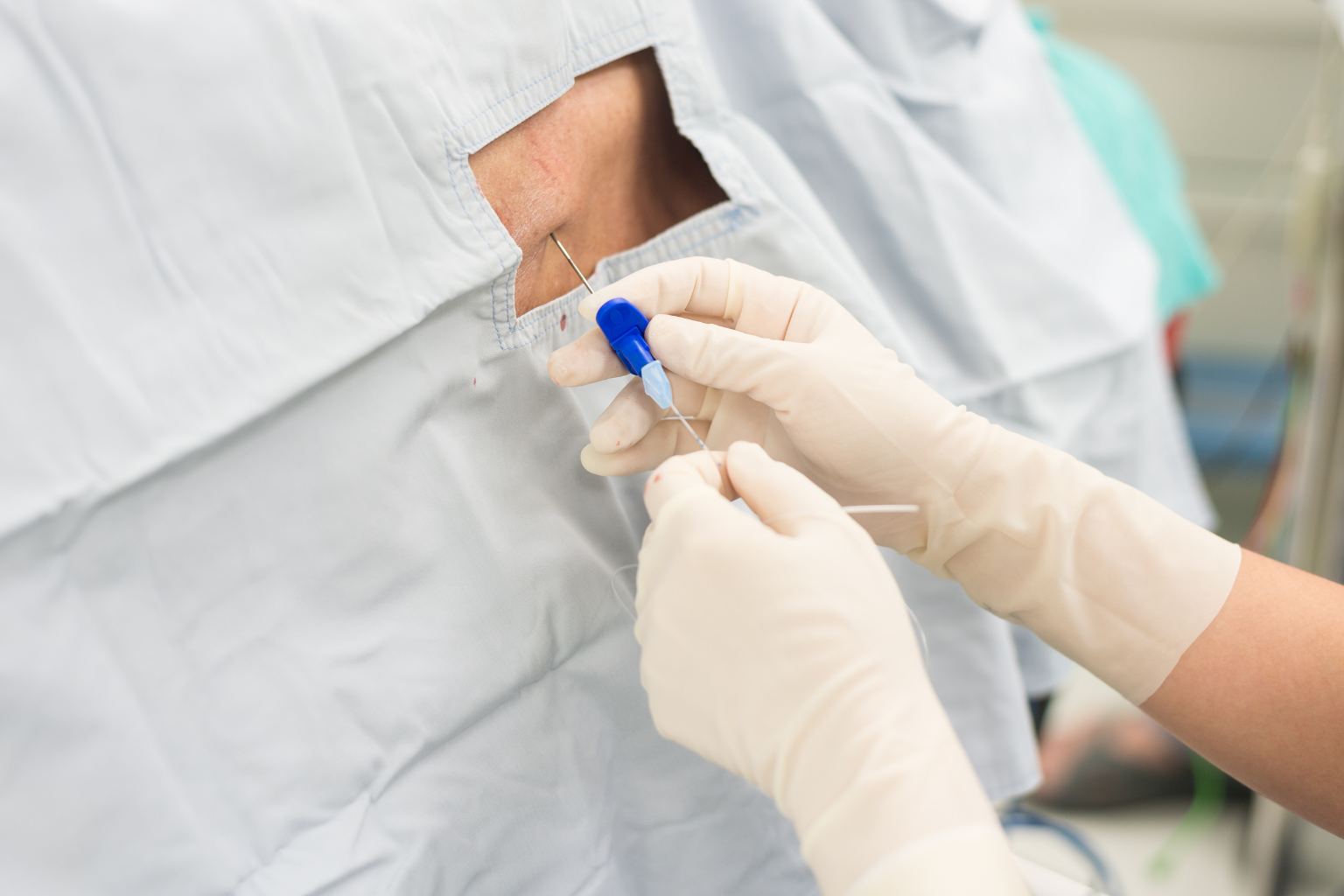



What is forehead Botox?
Forehead Botox is a non-surgical cosmetic treatment that uses botulinum toxin to temporarily relax the muscles responsible for horizontal forehead lines. As the NHS explains, botulinum toxin injections relax the muscles in your face to smooth out lines and wrinkles, and are not permanent, typically lasting around three to four months.
The frontalis muscle runs across the forehead and is responsible for raising the eyebrows. Every time you raise your brows in surprise, concentration, or conversation, this muscle contracts and the overlying skin folds. Over time, these repeated movements leave permanent creases in the skin even when your face is completely at rest.
Botox works by temporarily blocking the nerve signals to that muscle, reducing how forcefully it contracts, which in turn softens or prevents those lines from forming.
It is important to understand that the goal is reduction, not elimination. A skilled practitioner will not aim to paralyse the muscle entirely. They will use precise doses in carefully chosen injection points to take the edge off your lines while preserving natural movement. That is the difference between a refreshed result and a frozen one.
What causes forehead lines?
Forehead lines fall into two categories: dynamic lines and static lines. Dynamic lines appear when you move your face and disappear when your face is relaxed. Static lines are present all the time, even when your face is completely still. Most people start with dynamic lines and gradually develop static ones as the skin ages.
Several factors contribute to forehead lines developing and deepening. Ageing is the primary driver. As we get older, the skin loses its ability to spring back after repeated muscle movement. Sun exposure, smoking, dehydration, and stress all accelerate this process. Genetics also plays a role. Some people are predisposed to more expressive forehead movement, or to skin that is thinner and more prone to creasing earlier in life.
Botox does not address all of these causes, but it directly targets the muscular component, which is often the primary driver. For deeper static lines, a practitioner might discuss combining Botox with a skin booster or filler to address skin quality as well as muscle activity.
Visit our Bishop's Stortford clinic for a personalised assessment, expert medical advice, and treatment recommendations tailored to your individual needs.

What are the common signs that people treat with forehead Botox?
Forehead Botox is typically considered when one or more of the following are present:
- Horizontal lines across the forehead that are visible even when your face is at rest
- Lines that have become deeper and more pronounced over the past few years
- A tired or older appearance that does not match how you feel
- Lines that appear when you raise your eyebrows and no longer fully disappear
- Self-consciousness about your forehead in photos or in close conversation
It is worth noting that forehead Botox is often combined with treatment of the frown lines between the eyebrows (the glabellar area) and crow's feet around the eyes. These three areas are frequently referred to together, as treating one in isolation can sometimes create an imbalanced result.
How does a good result differ from the frozen look?
The frozen look happens for a specific reason: too much botulinum toxin is injected, or it is placed in the wrong location, which fully paralyses the frontalis muscle. When this muscle cannot move at all, the forehead looks flat and expressionless. The eyebrows may feel heavy. The face can look blank rather than relaxed.
NHS guidance on botulinum toxin is clear that a frozen look is a known risk when too much botulinum toxin is injected, which is why it recommends ensuring that whoever performs the treatment is a suitably qualified and experienced practitioner.
A good result, by contrast, preserves the ability to raise your eyebrows and express yourself naturally, but reduces the depth and visibility of resting lines. The forehead looks smoother without appearing immobile. This is achieved through careful assessment of the individual before treatment, conservative dosing, and precise placement that takes into account the patient's unique muscle anatomy.
This is why the qualifications and experience of the person treating you matter enormously. Botulinum toxin is a prescription-only medicine in the UK. By law, it can only be prescribed following a face-to-face consultation with a qualified medical professional such as a doctor or nurse prescriber.
Visit our Bishop's Stortford clinic for a personalised assessment, expert medical advice, and treatment recommendations tailored to your individual needs.
When is it worth consulting a doctor about forehead lines?
Not every forehead line needs treatment, and there is no right or wrong time to start. But it may be worth booking a consultation if:
- Your forehead lines are affecting your confidence or the way you feel about your appearance
- Lines are now visible at rest and not just during facial movement
- You are approaching a significant event such as a wedding, milestone birthday, or professional occasion
- You have tried skincare products and creams but are not seeing the improvement you hoped for
- You want to understand your options from a medical professional before making any decisions
A consultation is not a commitment to treatment. It is simply an opportunity to get honest, personalised advice about what would be appropriate for your face, your skin, and your goals.
How SABA Health Clinic can help
At SABA Health Clinic in Bishop's Stortford, our aesthetic treatments are delivered by doctor-led practitioners in a safe, clinical environment. Forehead Botox is one of our most requested treatments, and our approach is always to achieve natural, proportionate results.
- Doctor-led anti-wrinkle consultations with no GP referral required
- Personalised assessment of your facial anatomy before any treatment takes place
- Conservative dosing philosophy to preserve natural expression and avoid overcorrection
- Forehead Botox available as a single area or combined with frown lines and crow's feet
- Follow-up appointments to review results and make adjustments if needed
Visit our Bishop's Stortford clinic for a personalised assessment, expert medical advice, and treatment recommendations tailored to your individual needs.

.png)