


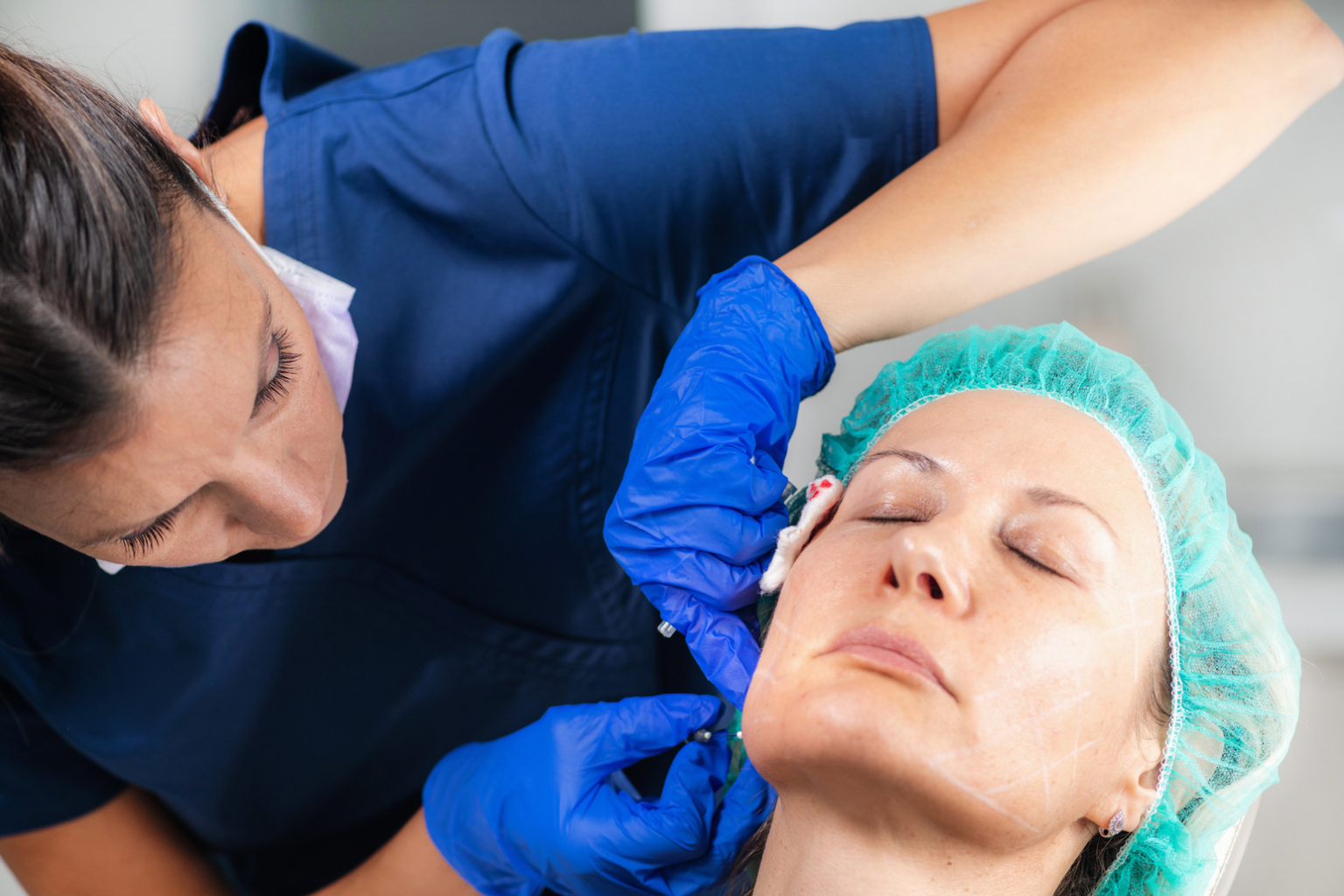
What is lower-face sagging, and how can filler help?
Sagging along the jawline and lower face, often described as jowls, is one of the most common visible signs of facial ageing. It happens gradually, and by the time it becomes noticeable, the underlying changes have usually been developing for years.
Dermal filler works by restoring lost volume and structural support beneath the skin, rather than removing excess skin the way surgery does. According to research on structural facial rejuvenation, volume loss is now understood to be a critical component of facial ageing, and replacing that volume has become central to both surgical and non-surgical approaches to a more youthful appearance.
For people with mild to moderate sagging, this can make filler a genuine non-surgical option rather than simply a temporary fix.
It's worth being clear from the outset that filler is not a facelift. It can restore support and soften the appearance of jowls, but it works within the limits of what volume replacement alone can achieve.
Which areas does lower-face filler treat?
Filler for jowls and sagging is rarely placed in just one spot. It's usually used across a few connected areas to restore overall support to the lower face.
- The jawline, to re-establish a firmer contour along the mandible
- The pre-jowl sulcus, the hollow that forms just in front of the jowl itself
- The chin, where added projection can improve balance and reduce the appearance of sagging beside it
- The cheeks, since restoring midface volume reduces the descent of tissue that contributes to jowls lower down
- Marionette lines, the folds that run from the corners of the mouth toward the chin
Not every area needs to be treated for every patient. A clinician will usually assess which combination best addresses your specific pattern of sagging.
Book a consultation at our Bishop's Stortford clinic and we'll make sure your jowl filler is placed safely.

What causes jowls and sagging in the lower face?
Facial ageing is not caused by one single change. Several processes contribute to it, including the loss of collagen, displacement and enlargement of fat, and muscle relaxation, each of which plays a role in how the face changes shape over time.
As collagen production slows, the skin loses some of its firmness and ability to resist stretching. At the same time, the fat compartments that once gave the face its shape shift and reduce in volume, particularly around the cheeks and jawline, so there is less structural support holding everything in place.
Whether the resulting appearance is best described as the face sinking or sagging, both processes are now understood to occur together, and restoring volume has become a key part of addressing them.
None of this reflects anything you have done wrong. It's a structural change that happens to almost everyone with time, and it's exactly what non-surgical volume replacement is designed to address.
Filler vs a surgical facelift
This is usually the question underneath the question. Filler and a surgical facelift work in different ways, and it helps to understand the difference before deciding what's right for you.
Filler adds volume beneath the skin to restore support and soften sagging, with no incisions and very little downtime. Results typically last several months to a couple of years depending on the type used and area treated, so it is repeatable but not permanent.
A surgical facelift, by contrast, repositions the deeper tissue layers and removes excess skin, which is why it can address more advanced sagging and looser skin than filler alone.
For people with mild to moderate jowling and reasonable skin elasticity, filler can achieve a genuinely noticeable improvement without surgery. For more advanced skin laxity, filler can still help, but it may not fully replicate what surgery would achieve. An honest consultation should tell you which category you fall into, rather than assuming filler is the answer for everyone.
Book a consultation at our Bishop's Stortford clinic and we'll make sure your jowl filler is placed safely.
When should you consider filler for jowls and sagging?
Filler tends to suit certain situations better than others. It may be worth considering if:
- Your sagging is mild to moderate, without significant loose or excess skin
- You want a non-surgical option with little to no recovery time
- You are comfortable with results that are temporary rather than permanent
- You have realistic expectations about what volume replacement can and cannot change
Before going ahead, it's worth being clear about why you want to make this change and doing your research into the procedure itself. A proper consultation should also cover what the procedure involves, what to expect afterwards, the potential risks and complications, and what you can realistically expect to look like once it settles.
How SABA Health Clinic can help
At SABA Health Clinic in Bishop's Stortford, we offer medically-led dermal filler treatment for jowls and lower-face sagging, tailored to your individual pattern of volume loss.
- Personalised consultation to assess whether filler alone is suitable, or whether other options should be discussed
- Treatment across the jawline, cheeks, chin and marionette lines, combined where appropriate
- Same-day or next-day appointments with no GP referral needed
- Hyaluronidase available if you ever want filler dissolved or adjusted
Book a consultation at our Bishop's Stortford clinic and we'll make sure your jowl filler is placed safely.

.png)








.svg)


