


What is Botox, and what does a 3-area treatment mean?
Botox is the most widely recognised brand name for botulinum toxin, a prescription-only medicine that temporarily relaxes specific facial muscles. When injected into targeted muscles, it reduces their ability to contract, smoothing the lines and wrinkles that form when those muscles move. This mechanism works the same way in Botox for women and Botox for men, since results depend on muscle activity rather than gender.
As noted by the NHS, botulinum toxin is a well-established cosmetic treatment with a recognised safety profile when administered by a suitably qualified practitioner.
A 3-area treatment refers to treating three distinct zones of the upper face in a single appointment. This is the most popular combination because it addresses the areas most people notice as they age. Each area receives a series of small, precise injections targeting the muscles responsible for specific expression lines.
It is worth knowing that "Botox" is technically a brand name. Other botulinum toxin products, such as Dysport and Xeomin, work in the same way. At SABA Health Clinic, treatments are carried out by trained medical clinicians, and the product used will always be discussed with you during your consultation.
What areas are included in a 3-area Botox treatment?
The three areas most commonly treated, and those covered in SABA's 3-area package, are the zones of the upper face most affected by repeated muscle movement:
- Forehead lines: The horizontal lines that appear when you raise your eyebrows. These become more deeply set over time due to repeated upward movement of the frontalis muscle.
- Frown lines (glabella): The vertical lines between the eyebrows, sometimes called the "elevens." These form when the muscles that draw the brows together contract repeatedly during concentration or frowning.
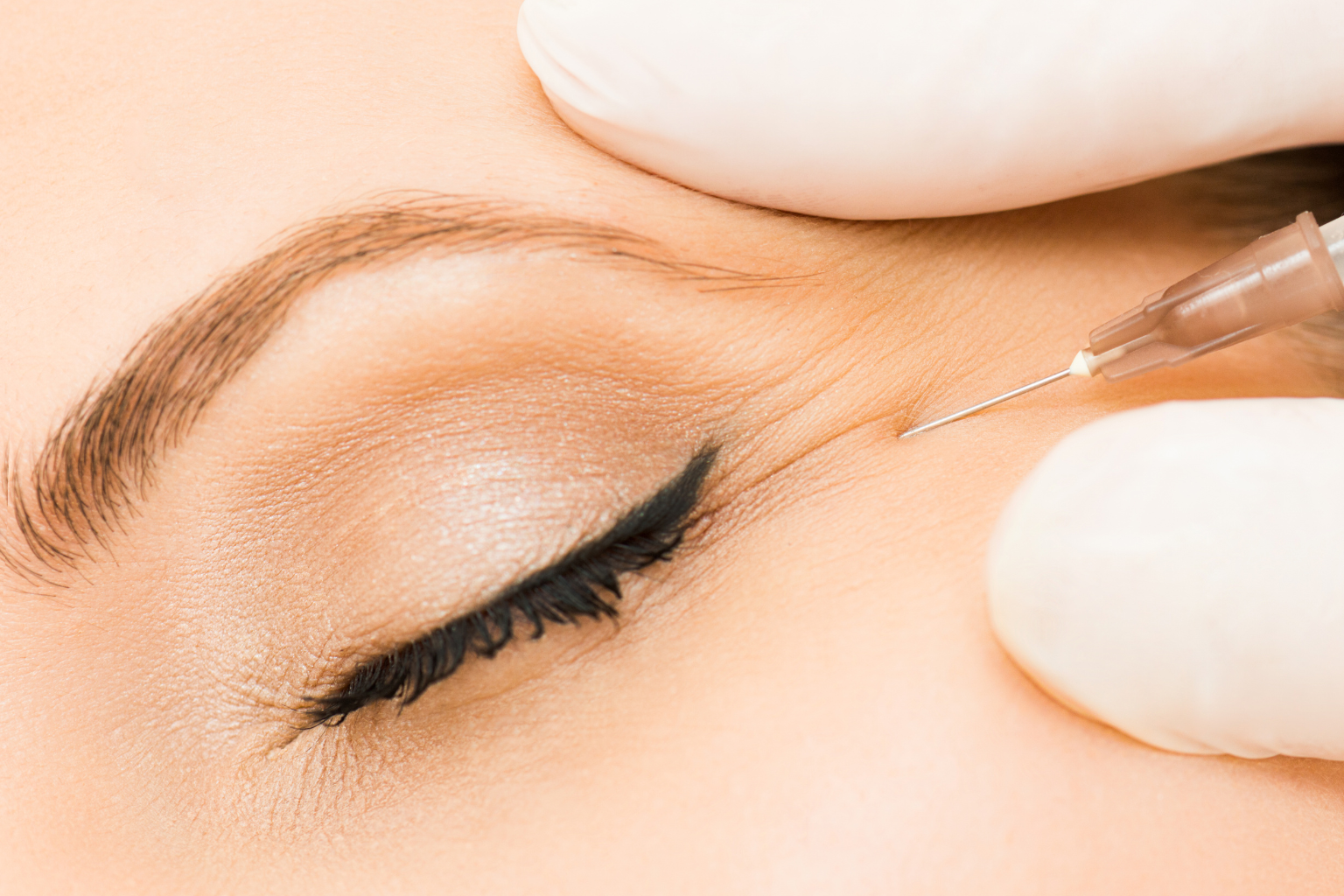
- Crow's feet: The fine lines that fan outward from the corners of the eyes when you smile or squint. The orbicularis oculi muscle contracts repeatedly throughout the day, contributing to these lines over time.
These three areas work well together because they address the upper face as a whole. Treating them in combination tends to produce a more balanced, natural-looking result than treating any single area in isolation.
We'll always confirm exactly which product you're having. Book your consultation at our Bishop's Stortford clinic to find out.

What happens during the appointment?
A 3-area Botox appointment is straightforward and typically takes around 30 to 45 minutes from start to finish, including a consultation if it is your first visit.
Your clinician will begin by discussing your concerns and assessing your facial anatomy to determine the right injection points and dosage for your individual muscle structure.
You will be asked to make various expressions, such as raising your eyebrows, frowning, and squinting, so the clinician can observe how your muscles move and plan accordingly.
The injections themselves use very fine needles and take only a few minutes. Most people describe the sensation as a mild pinch. Results begin to show within two to three days, with the full effect typically visible at around two weeks.
How long do results last?
The effects of botulinum toxin typically last around three to four months, after which the muscles gradually regain movement and lines begin to reappear. The effects are not permanent, and most people choose to have repeat treatments every three to four months to maintain their results.
A few factors can influence longevity. People who are more physically active or who have stronger facial muscles may find results fade a little faster. On the other hand, people who have had regular treatments over several years sometimes find that results last slightly longer as the muscles become less active over time.
Botulinum toxin should not be repeated more frequently than every three months. Having it too often can reduce its effectiveness over time.
Is 3-area Botox worth it?
That depends on what you are hoping to achieve. Botox works well for dynamic wrinkles, which are the lines caused by muscle movement. If the lines you are concerned about appear mainly when your face is moving and soften when your face is at rest, it is likely to be effective.
It is less effective on static wrinkles, which are lines present even when your face is completely relaxed. These are caused by skin changes and collagen loss rather than muscle movement alone, and for those concerns, other treatments such as skin boosters or microneedling may be more appropriate.
Many people find that consistent treatments over time make a real difference, not just to how their skin looks, but to how they feel. If you have been considering it for a while, a consultation is the best place to start, with no obligation to go ahead. The exact cost of 3-area Botox depends on your individual treatment plan and is always confirmed at that consultation.
We'll always confirm exactly which product you're having. Book your consultation at our Bishop's Stortford clinic to find out.
When should you speak to a specialist?
Botulinum toxin is a prescription-only medicine that can only be given following a face-to-face consultation with a qualified healthcare professional. As the NHS advises, you should always check that your practitioner is on a recognised register such as the Joint Council of Cosmetic Practitioners (JCCP) or Save Face, which confirms they meet set standards in training, skill, and insurance. Consider booking a consultation if:
- You have lines on your forehead, between your brows, or around your eyes that are affecting your confidence
- You want a preventative approach, as starting earlier can help slow the deepening of expression lines over time
- You have previously had Botox elsewhere and want a more medically-led, personalised approach
- You are unsure whether Botox or another treatment is right for your specific concerns
Botox is not suitable during pregnancy or breastfeeding, or for those with certain neuromuscular conditions. Your clinician will always review your medical history before any treatment.
How SABA Health Clinic can help
At SABA Health Clinic in Bishop's Stortford, our anti-wrinkle treatments are delivered by medically trained clinicians in a safe, clinical environment.
- Doctor-led 3-area Botox covering forehead lines, frown lines, and crow's feet
- Personalised consultation to assess your facial anatomy and discuss your goals before any treatment is carried out
- Same-week appointments with no GP referral needed
- Honest, unhurried advice. If Botox is not the right option for your concerns, we will tell you and discuss alternatives
- A comfortable, judgment-free environment where your questions are always welcome
We'll always confirm exactly which product you're having. Book your consultation at our Bishop's Stortford clinic to find out.

.png)








.svg)


