


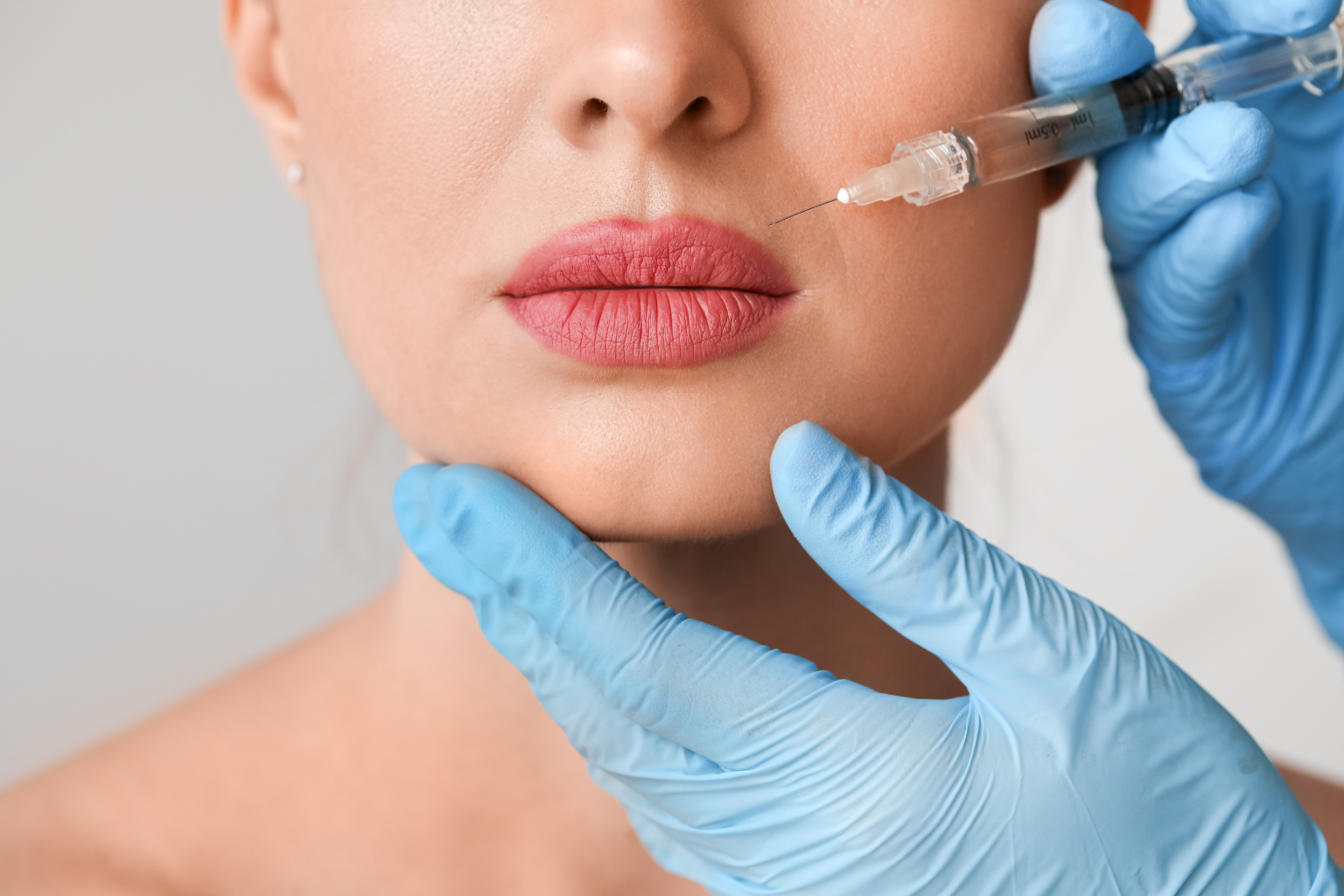
What is lip filler swelling, and why does it happen?
Swelling after lip filler is your body's natural response to two things happening at once. The needle itself causes minor tissue trauma, and the filler material, usually made from hyaluronic acid, temporarily draws in water as it settles into place.
Some swelling is expected with every lip filler treatment, even when it is carried out perfectly. Peer-reviewed research on hyaluronic acid fillers shows that properly administered injections can still cause temporary swelling that typically resolves within two to three days, though certain formulations may cause more noticeable initial swelling because of how they attract water.
Why does swelling vary from person to person?
A few factors tend to make the biggest difference to how much you swell.
- The specific filler used, since some formulations bind more water than others
- How much product was injected, and precisely where
- Your own healing response, including circulation and how your tissue reacts to needle trauma
- Whether this is your first lip filler treatment, as first-time swelling is often more noticeable than in repeat treatments
If your lips feel more swollen than expected, book with our Bishop's Stortford clinic to check the technique.

The lip filler swelling stages, day by day
Recovery generally follows a predictable pattern, though the exact timing varies from person to person.
Day 0 to 1: Peak swelling
Swelling is usually at its most noticeable in the first 24 hours, and your lips may look uneven or larger than expected. A cold compress held gently against the area for short intervals can help.
Day 2 to 3: Swelling begins to settle
Research on hyaluronic acid injections shows that redness and swelling typically resolve within one to two days, though the reaction can last three days or slightly longer, specifically for lip injections. Bruising, if present, is often more visible during this stage even as swelling itself starts to ease.
Avoid touching or pressing on your lips, and skip strenuous exercise, alcohol, and excess heat until swelling has settled.
Day 4 to 7: Most swelling resolves
By the end of the first week, the majority of visible puffiness should have gone down. Any remaining asymmetry is usually minor and continues to even out on its own. Most people feel comfortable wearing normal lip products again by now, provided the area is no longer tender.
Day 7 to 14: Final shape settles
By around two weeks, any residual swelling should have fully resolved, revealing your true result. This is the point at which it becomes fair to judge the final shape and size of your lips, and the right time to book a follow-up if anything still looks uneven.
If your lips feel more swollen than expected, book with our Bishop's Stortford clinic to check the technique.
What's normal, and what's not?
Most of what you'll notice in the days after treatment is a normal part of healing, but a few signs mean you should seek help sooner rather than later.
Normal signs during recovery
A certain amount of swelling and discomfort is a normal part of healing.
- Tightness, mild tenderness, or fullness in the first few days
- Slight asymmetry that improves over the first week
- Mild bruising alongside the swelling
- Temporary firmness as the filler settles into place
Signs that need medical attention
A small number of symptoms fall outside normal recovery and need urgent attention rather than time.
- Swelling that gets significantly worse after day three instead of improving
- Severe or worsening pain, rather than mild tenderness
- Skin that turns pale, mottled, or blue, particularly around or beyond the lips
- Signs of infection, such as spreading redness, warmth, or fever
- Any sudden change in vision
These symptoms can, in rare cases, indicate the filler has affected blood flow to the tissue, which needs immediate medical review. The NHS notes that complications of dermal fillers can be serious, including infection, nerve damage, and blindness, which is why choosing a properly trained practitioner matters so much.
If you notice any of the signs above, contact your practitioner immediately or seek urgent medical care, and you can also report side effects through the MHRA's Yellow Card Scheme.
How SABA Health Clinic can help
At SABA Health Clinic in Bishop's Stortford, lip filler is delivered by a medically-led team who prioritise safety alongside natural-looking results.
- Consultations that set realistic expectations about swelling and recovery before you begin
- Treatment using licensed products administered by a medically trained practitioner
- Same-week appointments with no GP referral needed
- Clear aftercare guidance and direct access to your practitioner if you have concerns during recovery
- Hyaluronidase available on-site to dissolve filler if ever needed
If your lips feel more swollen than expected, book with our Bishop's Stortford clinic to check the technique.

.png)






.svg)


